
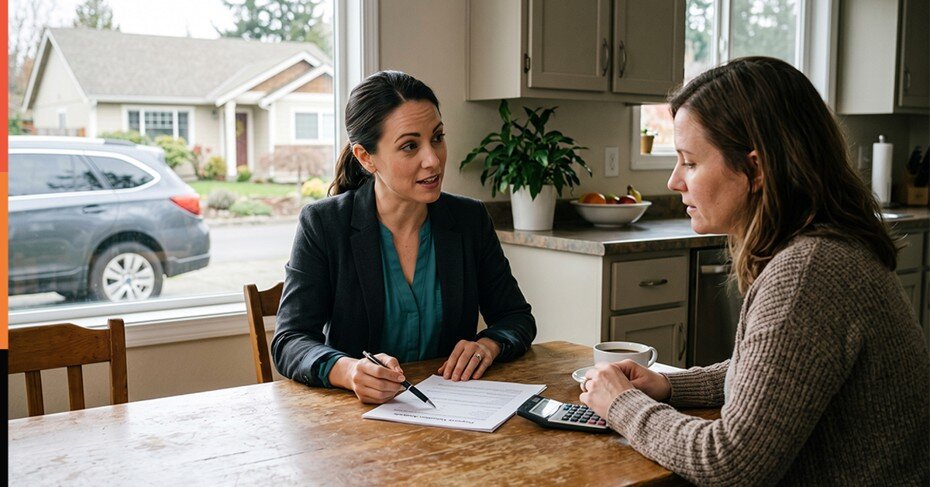
You get a number on a piece of paper, and it feels like it came out of nowhere. Where did that figure come from, and why is it lower than your neighbor’s listing price? Understanding cash for houses offers takes the mystery out of the process. Once you know the math behind the number, you can tell a fair offer from a lowball one in minutes.
The Basic Formula Behind Every Cash Offer
Most cash home buyers, whether they are individual investors or larger companies, build their offer around one core formula. It looks like this:
Cash Offer = After-Repair Value − Repair Costs − Buyer’s Profit Margin − Holding and Selling Costs
Each piece of that formula pulls the number up or down. Understanding each part helps you see exactly why your offer landed where it did.
1. After-Repair Value (ARV) Sets the Ceiling
The after-repair value is what your home would sell for once it is fully fixed up and market-ready. Buyers estimate this using recent sales of similar homes nearby, often called comps. A stronger neighborhood with recent high sales pushes your ARV, and your offer, higher.
2. Repair Costs Come Straight Off the Top
Every crack, leak, or outdated system gets priced out and subtracted from the ARV. A home needing a new roof, updated electrical, or a kitchen remodel will see a bigger deduction than a home that only needs paint and carpet. This is why two homes on the same street can get very different offers.
3. Your Home’s Size, Layout, and Features Matter
Square footage, bedroom and bathroom count, lot size, and even parking all factor into value. A three-bedroom home typically commands more than a two-bedroom in the same area, and an oversized lot can add value even if the house itself needs work.
4. Location Drives More of the Number Than You Might Think
School zones, crime rates, flood zones, and proximity to highways or shopping all shape what a home is worth. Two identical houses a mile apart can carry very different offers simply because of where they sit.
5. Liens, Back Taxes, and Title Issues Reduce Your Net
If your property has a tax lien, an old contractor’s claim, or unresolved title issues, these debts typically get paid out of the sale proceeds at closing. A buyer will factor this into their offer, or at least flag it early, so there are no surprises at the closing table.
6. Local Market Conditions Shift the Whole Equation
In a hot seller’s market with low inventory, offers tend to run higher because resale is fast and easy. In a slower market with more competition, buyers build in an extra cushion since they may need to hold the property longer before reselling.
7. Holding and Selling Costs Get Built In
Once a buyer owns your home, they pay property taxes, insurance, utilities, and sometimes a mortgage on it until they resell or rent it out. They also budget for future agent commissions if they plan to resell through the MLS. All of this gets subtracted upfront so the math still works for them later.
8. The Buyer’s Profit Margin Is the Final Piece
Cash buyers are running a business, not a charity, so a profit margin is always part of the offer. Experienced investors often work within a set percentage of ARV, commonly referred to as a rule of thumb in the industry, to make sure the deal still works after repairs and costs.
Let’s understand with an example
Say your home would be worth $250,000 fully renovated. It needs $30,000 in repairs. A buyer’s estimated holding and selling costs come to $12,000, and their target profit margin is $28,000. Subtract all three from the ARV, and the offer lands around $180,000. This is not the buyer shortchanging you. It is the math that keeps the deal fair for both sides.
Cash Offer Factors at a Glance
| Factor | Effect on Your Offer |
| After-repair value (ARV) | Higher ARV raises the offer ceiling |
| Repair needs | More repairs lower the offer |
| Home size and features | More space and updates raise value |
| Location and school zone | Strong areas raise the offer |
| Liens or back taxes | Debts reduce your net proceeds |
| Market conditions | Hot markets support higher offers |
| Buyer’s holding costs | Higher carrying costs lower the offer |
| Buyer’s profit margin | A built-in cost of doing business |
How to Make Sure Your Offer Is Fair?
- Ask for the breakdown – A trustworthy buyer will walk you through their comps and repair estimate, not just hand you a flat number.
- Get more than one offer – Comparing two or three cash offers quickly shows you the going rate for a home like yours.
- Compare net proceeds, not just the offer number – A traditional sale may show a higher price but leave you with less after commissions, repairs, and months of carrying costs.
- Check reviews and proof of funds – A real buyer can show verified funds and a track record of closed deals in your area.
FAQs
Q1) Why is a cash offer usually lower than my home’s listing price?
A cash offer accounts for repairs, holding costs, and the buyer’s profit margin upfront. In exchange, you skip commissions, showings, and months of waiting.
Q2) Can I negotiate a cash offer?
Yes. Ask the buyer to explain their numbers, and share any recent repairs or upgrades they may have missed. A fair buyer will adjust when the facts support it.
Q3) Do small cosmetic issues really affect my offer?
Cosmetic issues like paint or flooring usually have a small effect. Structural problems like roof damage or foundation cracks have a much bigger impact on the number.
Q4) How do buyers estimate my home’s after-repair value?
They compare your home to similar houses that recently sold nearby, adjusting for size, condition, and location to land on a realistic resale price.
Q5) Is a lower cash offer ever the better deal?
Sometimes, yes. Once you subtract repairs, commissions, and months of mortgage payments from a traditional sale, a cash offer can leave you with more money in hand.
Get a Clear, Honest Cash Offer for Your Home
Now that you know what shapes a cash offer, you can walk into any conversation with a buyer feeling confident instead of guessing. We believe you deserve a number you understand, not one you just have to trust blindly. At Tampa Fast Home Buyer, we walk you through every piece of our offer, from comps to repair costs, so nothing feels like a mystery. Reach out today, and let’s find out what your home is really worth in cash.