
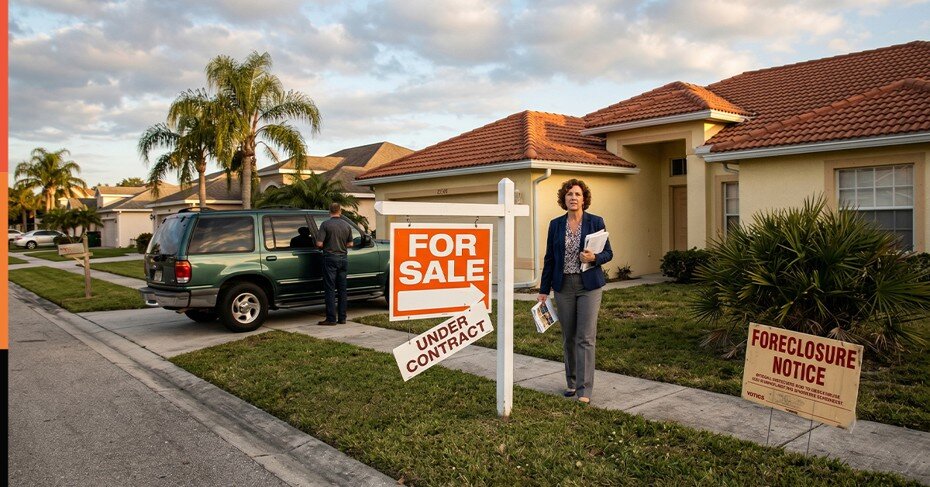
Yes, you can sell your house during foreclosure in Florida. As long as the foreclosure sale has not happened yet, you still own the property and have the legal right to sell it. Acting fast is what matters most.
Selling a house before foreclosure is one of the smartest moves a distressed homeowner can make. It gives you more control, more money, and less long-term damage to your credit than waiting for the bank to take over.
How Does the Florida Foreclosure Timeline Work?
Florida uses a judicial foreclosure process. That means your lender must file a lawsuit and go through the courts before your home can be sold. This process takes time, and that time is your window to act.
Here is the foreclosure process step by step, according to foreclosure defense attorneys in Florida:
- Missed payments — You fall behind on your mortgage. The lender sends default notices.
- Lawsuit filed — If payments aren’t caught up, the lender files a foreclosure lawsuit.
- Court summons — You receive official notice and have 20 days to respond.
- Court hearing — A judge reviews the case. You can challenge the foreclosure here.
- Final judgment — If uncontested, the court orders a foreclosure sale.
- Foreclosure sale date — The home is sold at public auction to satisfy the debt.
You have until the foreclosure sale date to sell the home on your own terms. Every stage before that final sale is a legitimate opportunity to sell a house before foreclosure.
Why Selling Before the Foreclosure Sale Is the Right Move?
Protects Your Credit Score
A completed foreclosure can stay on your credit report for up to seven years. Selling your home before the foreclosure sale typically results in less credit damage than allowing the foreclosure to go through. A short sale, for example, generally appears on your credit report similarly to a settled debt, bad, but far better than a foreclosure.
Protecting your credit now means faster financial recovery later. That matters when you need to rent a new home, apply for a loan, or rebuild stability.
Puts More Money in Your Pocket
When a bank sells your home at a foreclosure auction, they aren’t trying to get you the best price. They just want to recover what they’re owed.
Selling on your own, with time to show the home and negotiate, typically results in a higher sale price than a foreclosure auction. A higher price also reduces or eliminates the risk of a deficiency judgment, which is when the lender sues you for any remaining balance after the sale.
Gives You a Financial Fresh Start
In some cases, if you handle the sale before the foreclosure, you may be able to negotiate with the lender to forgive any remaining balance on the loan. This is not guaranteed, but it is a real possibility, especially with the right guidance.
Your Three Main Options for Selling During Foreclosure
Option 1 – Sell to a Cash Buyer or Investor
This is the fastest path when you need to sell your house fast in Florida. Cash buyers purchase homes as-is — no repairs, no showings, no waiting on bank approvals, and no real estate agent commissions eating into your proceeds.
You will likely receive less than full market value. But if your home needs major repairs, or you have only weeks before a sale date, this option is often the most realistic and least stressful. Cash investors deal with distressed properties every day. They already know how to handle title issues, lender coordination, and tight deadlines, so you do not have to figure that out alone.
Closing timelines with a cash buyer are also dramatically shorter. While a traditional listing can take 60–90 days, a cash sale in Florida can close in as little as seven to fourteen days.
Option 2 – List With a Real Estate Agent
If you have enough time before the foreclosure sale, working with a real estate agent gives you the best chance of maximizing your sale price. An agent handles pricing, marketing, staging, and buyer negotiations — all of which can push your final number higher.
This option works best when your home is in decent condition and you have at least 60–90 days before the foreclosure sale.
Option 3 – Pursue a Short Sale
A short sale means selling the home for less than what you owe on the mortgage, with lender approval. Short sales typically appear on a credit report similarly to a settled debt, which causes less credit damage than a completed foreclosure.
Short sales take longer to close because the lender must approve the deal. If time is tight, a cash buyer is usually a faster path.
How Does the Cash Home Sale Process Work When You’re in Foreclosure?
If you have never sold to a cash buyer before, the process is simpler than you might expect. There are no open houses, no repair negotiations, and no financing contingencies that can fall through at the last minute.
Here is how it typically works:
- Request an offer – Contact a cash buyer and share basic details about your property. No preparation or cleanup required.
- Receive a no-obligation cash offer – Most cash buyers provide an offer within 24 to 48 hours after a quick property assessment.
- Review and accept – You review the offer on your own timeline. There is no pressure to accept, and no fees if you walk away.
- Title and paperwork -The buyer handles the title search and closing paperwork. You do not need to coordinate this yourself.
- Close and get paid – Closing typically happens within 7 to 14 days. You receive your proceeds, and the foreclosure process stops.
The entire process is designed around your situation,not the buyer’s convenience. That matters when you are working against a court-ordered sale date.
Selling a house before foreclosure does not have to feel overwhelming. A cash sale strips out every step that slows down a traditional transaction. If time is short and certainty matters, it is often the clearest path forward.
What Makes Selling During Foreclosure Challenging?
Knowing the obstacles helps you plan around them. Common challenges when selling a home in foreclosure include a tight timeline, potential title issues that may scare off traditional buyers, the need to coordinate with your lender, and difficulty for buyers in securing financing.
These challenges are manageable, especially when you work with buyers who are experienced in distressed property sales. Cash investors and as-is buyers deal with these issues regularly and know how to close despite them.
The Key Rule: Time Is Your Most Important Asset
The further you are from the foreclosure sale date, the more options you have. Waiting makes every path harder. A traditional listing requires the most time. A short sale requires lender negotiations. Even a cash sale needs a few days to process title and paperwork.
If you have already received a court summons, do not wait to explore your options. The clock is running.
FAQs
Q1) Can I sell my house after the foreclosure lawsuit is filed in Florida?
Yes. As long as the foreclosure sale has not occurred, you still own the home and can sell it. Act as quickly as possible; the earlier you start, the more options you have.
Q2) What happens if I owe more than my house is worth?
You may be able to pursue a short sale, where the lender agrees to accept less than what you owe. This avoids a completed foreclosure and usually causes less credit damage.
Q3) How fast can I sell my house in Florida during foreclosure?
A cash buyer can close in as little as seven to fourteen days. Traditional listings take longer and work best if you have 60 or more days before the scheduled sale.
Q4) Do I have to disclose the foreclosure when selling?
Florida has disclosure requirements for sellers. Selling a house before foreclosure typically comes with additional disclosure obligations. Working with a real estate professional familiar with distressed sales helps you stay compliant.
Q5) Will selling during foreclosure stop the process?
Yes. If the sale closes before the foreclosure sale date and the mortgage is paid off or resolved, the foreclosure process ends. The key is completing the sale before the court-scheduled auction.
Q6) What is a deficiency judgment, and how do I avoid it?
A deficiency judgment is a court order requiring you to pay the difference between your home’s sale price and your remaining mortgage balance. Selling at a higher price or negotiating with the lender reduces the risk of one being filed against you.
Ready to Sell Your House Fast in Florida? Here’s Your Next Step.
If you are facing foreclosure and need to act now, Tampa Fast Home Buyer is here to help. We buy homes as-is across Florida, no repairs, no commissions, no waiting. Whether you are early in the process or running out of time, we can make you a fair cash offer and close on your schedule.
Contact Tampa Fast Home Buyer today to find out what your home is worth and how fast we can close. You have more options than you think, but only if you act now.