
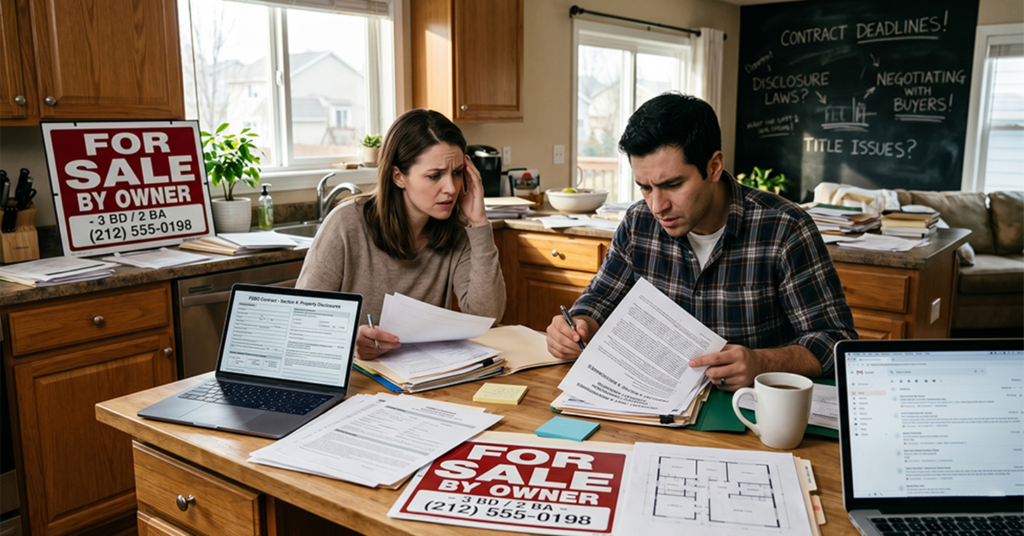
Selling a home on your own can sound like a smart move, especially when you are trying to sell a house fast in Tampa, FL. Some owners also compare that path with cash home buyers near you because both options can feel faster than a traditional listing. But the real question is not just how fast you can sell. It is how much risk you are taking on when you handle the deal yourself. NAR’s latest seller report shows that 90% of sellers used an agent, while only 6% sold FSBO, and FSBO homes sold for a lower median price than agent-assisted homes.
Why does selling without an agent seem tempting?
The answer is simple: money. Real estate agents charge between 5% and 6% of your sale price. On a $300,000 home, that’s roughly $15,000 to $18,000 in commissions. The thought of keeping that money feels amazing. But this is where things get complicated. NAR also found that FSBO sellers most often chose that route because they sold to a relative, friend, or neighbor, or because they did not want to pay a commission.
You might save on agent commissions. However, you could lose money in other ways. Pricing mistakes, negotiation errors, and legal problems can erase any savings. Some sellers also underestimate the time and stress involved. What sounds like a quick project becomes a full-time job.
Risk 1: You may price the home wrong
Pricing is where many solo sellers get hurt first. The price is too low, and you leave money on the table forever. Once you sell, that opportunity is gone. A study from the National Association of Realtors found that homes sold by owners without agents averaged $360,000. Homes sold with agent help averaged $425,000. That’s a $65,000 difference.
Why? Agents do something called a comparative market analysis. They look at similar homes in your area that sold recently. They check the actual sale prices, not the asking prices. They consider how fast homes sold and what condition they were in.
As a private seller, this information isn’t easy to find. County records exist, but you have to know how to search them. Online sites show some data, but not all of it. Without complete information, you’re guessing. And when you guess on price, buyers with agents will know it.
Risk 2: Your marketing reach may be too small
A lot of owners think a yard sign and a few photos are enough. Usually, they are not. NAR says photos, detailed property information, and online search matter a great deal to buyers. It also found that most buyers found their home through online searches, and many viewed homes online before visiting in person.
That means weak marketing can shrink your buyer pool fast. If fewer people see the home, you get fewer offers. And fewer offers usually mean less room to negotiate. Even a nice home can sit if the listing looks thin or unpolished.
Risk 3: Negotiations can get complicated fast
A sale is never just about the top-line number. Buyers may ask for inspection repairs, closing credits, or special timing terms. The offer with the highest price is not always the best one overall. CFPB explains that closing paperwork and timing matter, and lenders require the Closing Disclosure three business days before closing so problems can be fixed before settlement.
Without experience, it is easy to agree to terms that hurt your net proceeds. A small repair credit can become a big hit if the inspection finds several issues. A rushed closing date can also create pressure that leads to mistakes. Good negotiation is about the full deal, not just the asking price.
Risk 4: Paperwork errors can create legal trouble
Real estate paperwork has to be accurate. CFPB says the HUD-1 Settlement Statement lists charges and credits to both the buyer and seller, and the settlement agent itemizes the charges in the transaction. That is just one example of how detailed the process gets. If any part is wrong or missing, closing can slow down or create disputes later.
Different states have different requirements. Some states require a lawyer at closing. Some don’t. But even if your state doesn’t require one, the paperwork is complex. Most homeowners aren’t trained to spot problems.
This is one reason many sellers bring in a real estate attorney, even if they skip the agent. They want someone to check the contract, review deadlines, and catch problems early. That kind of review can save a sale from falling apart at the last minute.
Risk 5: Disclosure mistakes can be expensive
Some homes carry extra disclosure duties. EPA says sellers of most housing built before 1978 must disclose known lead-based paint and lead-based paint hazards before the sale, provide related records, and give buyers 10 days for a lead inspection or risk assessment. That is a real legal duty, not a polite suggestion.
If you sell without an agent, you still have to meet those rules on your own. Missing a disclosure can lead to conflict after closing, and sometimes worse. This is where a little caution goes a long way.
Risk 6: You may be more exposed to scams
Fraud is a serious risk in home sales. CFPB warns sellers and buyers to act quickly if wiring instructions go wrong and to contact the bank or wire company right away. The FTC also warns about scams that use pressure, impersonation, or fake transfer requests. Those warnings matter because real estate transactions move real money, and scammers know it.
When you handle the sale yourself, you are the one checking emails, wiring details, and payment instructions. That makes slow verification a bad idea. One wrong transfer can be very hard to fix.
Risk 7: The process can eat your time
Selling a home takes more than posting a listing. You have to answer calls, schedule showings, follow up with buyers, review offers, and track deadlines. NAR’s seller report shows that many FSBO sellers did not actively market their home, which suggests some may have underestimated the work involved. The same report says paperwork and time management are two of the hardest parts of FSBO sales.
That is where stress builds. What looked like a simple savings plan can start to feel like a second job. If you do not have time for that, the risk rises fast.
Selling without an agent can still make sense
There are situations where FSBO can work. If you already know the buyer, or you are selling to a friend or relative, the process can be simpler. NAR found that 38% of FSBO sellers sold to a relative, friend, or neighbor, and 70% of successful FSBO sellers who knew the buyer were very satisfied with the process.
That said, even a simple sale still needs paperwork, disclosure, and clear terms. The smoother the deal looks, the more important it is to keep everything in writing. Good feelings are not enough once money and ownership are on the line.
A Simpler Option: Selling to Direct Cash Home Buyers
If your goal is to sell a house fast in Tampa, FL, it may be worth comparing direct-sale options, too. Many sellers look at cash home buyersnear them. These buyers:
- Purchase homes as-is
- Skip repairs and staging
- Close faster than traditional sales
That can reduce some of the biggest FSBO risks, especially around marketing, repairs, and buyer delays. NAR’s data also shows that cash buyers were common in 2024, which means this route is part of the market, not a rare backup plan.
If your goal is speed and simplicity, many sellers explore cash home buyers near you.
FAQs
Is it risky to sell a house without a Realtor?
Yes. The biggest risks are pricing mistakes, paperwork errors, weak marketing, and negotiation problems. Those issues can lower your final profit or slow the sale.
Do FSBO homes usually sell for less?
NAR found that FSBO homes sold for a median of $380,000 in 2023, compared with $435,000 for all homes and agent-assisted homes. That gap shows how costly a solo sale can be.
What is the hardest part of selling without an agent?
NAR says the hardest parts are getting the price right, selling on your timeline, and handling paperwork. Those are the areas where many sellers need the most help.
What scams should sellers watch for?
Watch for wire fraud, fake payment instructions, and scam emails that pretend to come from title or closing parties. CFPB and the FTC both warn sellers to verify everything before sending money.
Do I need to disclose lead paint if my home is older?
Yes, if the home was built before 1978, the rule applies. EPA says sellers must disclose known lead-based paint hazards and provide the required pamphlet and inspection period.
Ready to Skip the Stress and Sell Smarter?
Selling without an agent can work, but it is not the low-risk option it first appears to be. The biggest risks are bad pricing, weak marketing, difficult negotiations, legal mistakes, disclosure problems, scams, and too much stress. NAR, CFPB, FTC, and EPA all point to the same basic truth. A home sale has many moving parts, and the seller carries most of the burden when there is no agent involved.
If all of this feels like a lot, you are not alone. Selling a home is a big deal, and doing it alone can quickly become overwhelming. We have seen how small mistakes can turn into costly problems. At Tampa Fast Home Buyer, we make the process simple. If you want to sell your house fast in Tampa, FL, without dealing with listings, repairs, or negotiations, we can help. We work with homeowners who want a clear, quick, and hassle-free sale.
Reach out today and see what your home could be worth. It might be easier than you think.